
You’ll use SIP to set up, manage, and end calls while RTP carries audio/video. Start with INVITE (with SDP), watch 100/180, then 200 OK, send ACK, and media flows. REGISTER maps users, OPTIONS checks capabilities, BYE ends sessions. SDP negotiates codecs, ports, and direction; the answerer selects a compatible codec. RTP/RTCP run on paired ports, track timing, jitter, and loss. Re-INVITE/UPDATE adjusts mid-call. Build a small lab, capture packets, and verify each step to disclose the full workflow.
Key Takeaways
- Use SIP to set up, modify, and tear down calls; media flows separately over RTP for audio/video transport.
- Start calls with INVITE carrying SDP; expect 100 Trying, 180 Ringing, and finalize with 200 OK then ACK.
- Negotiate media via SDP offer/answer: list codecs, ports, and directions; answerer selects the first compatible codec.
- Carry media over RTP on even ports with RTCP on the next odd port; monitor jitter, loss, and RTT via RTCP reports.
- End calls with BYE and 200 OK; use UPDATE or re-INVITE for mid-call changes, and OPTIONS to probe capabilities.
SIP Signaling at a Glance
Although SIP is often mentioned alongside voice and video, it’s strictly the signaling layer that sets up, modifies, and tears down sessions while media travels separately over RTP. You use it as the “traffic cop,” directing requests and responses between endpoints and servers. It runs over UDP, TCP, or TLS, independent of transport choice.
Focus on sip message structure: start line, headers, and an optional body. Responses follow standardized 1xx–6xx codes, enabling clear state tracking. Embed SDP in the body (Content-Type: application/sdp) to advertise media types, codecs, ports, and addresses. The initial offer and the answer finalize parameters before RTP flows. SIP also underpins VoIP by establishing and managing calls in unified communications environments, enabling SIP trunking to replace legacy PRI lines.
SIP architecture relies on user agents, proxies, registrars, and location services. Registration binds an Address of Record to current IPs. For protection, use TLS for signaling and SRTP for media. Consider sip encoding formats when selecting transports and security.
Core SIP Methods and Their Roles
You’ve seen how SIP messages carry structure and SDP to set up media; now focus on the methods that drive those messages. SIP’s HTTP-like transactions give you flexible signaling patterns, clear roles, and advanced error handling. SIP messages can be transported over UDP, TCP, or TLS to enable secure communication.
INVITE starts a session (SDP in body); ACK confirms the final response; BYE ends a dialog. REGISTER binds your address to a reachable Contact. OPTIONS probes capabilities without committing. CANCEL stops a pending INVITE; PRACK acknowledges reliable provisional responses.
UPDATE adjusts session parameters mid-dialog; INFO carries mid-session data without changing state. SUBSCRIBE and NOTIFY implement event subscriptions; PUBLISH shares event state. REFER triggers transfers; MESSAGE enables instant messaging.
Use Allow to advertise supported methods. Control loops with Max-Forwards. Set Content-Type for bodies, track ordering with CSeq, and supply a routable Contact.
Standard SIP Call Flow Step-by-Step
A typical SIP call unfolds in clear phases that map signaling to media. You send an INVITE with SDP; proxies apply call routing techniques, querying a location server. You’ll see 100 Trying, then 180 Ringing, or Call Proceeding on gateways. Expect SIP authentication challenges when traversal requires credentials. SIP has six classes of responses, and a 200 OK indicates a successful request, aligning with HTTP/1.1 response code conventions.
When the callee accepts, you receive 200 OK with final SDP. You reply with ACK, completing the handshake and creating the dialog. Media establishes immediately after ACK, per the agreed offer/answer.
During the active phase, SIP stays quiet while endpoints communicate; proxies are bypassed unless features intervene. To change parameters, send a re-INVITE; use sendonly/receiveonly for hold and another re-INVITE to resume. REFER handles transfers; additional provisional responses may appear.
End calls with BYE and receive 200 OK.
RTP Media Streams and Transport
While SIP sets up and tears down sessions, RTP carries the media. You transport audio and video end-to-end over UDP, prioritizing timely delivery over reliability. RTP is regarded as the primary standard for audio/video transport in IP networks.
With rtp session management, you run distinct RTP sessions per stream—audio separate from video—letting receivers subscribe selectively. Each session uses an even-numbered port and pairs with RTCP on the next odd port for quality feedback and synchronization.
RTP packets include a 16-bit sequence number for loss detection and reordering, a timestamp for playout alignment, a 7-bit payload type, and an M bit to flag boundaries or events. CSRC entries label mixed sources. RTCP consumes about 5% bandwidth to report jitter, packet loss, and RTT, enabling cohesive presentation.
For scale, use rtp multicast transport to reach multiple destinations efficiently.
SDP Negotiation for Codecs and Ports
Because media can’t flow until endpoints agree on how, SDP negotiation defines the codecs and ports that make a SIP call interoperable. You embed SDP in INVITE and 200 OK, using RFC 3264’s offer/answer. List codecs by preference in m= lines, map payloads with a=rtpmap, and expose RTP ports; RTCP typically sits at port+1. The answerer picks the first compatible codec and returns matching parameters. If no common codec exists, you’ll see SIP 488. SIP sessions can involve video, voice, messaging, and other communications applications and services, and SDP enables negotiation of the codec to be used so that both endpoints agree and avoid one-way audio.
Use media direction (sendrecv/sendonly/recvonly) and rtcp-fb for control and quality. Re-INVITE or UPDATE lets you adjust mid-call. This rigor underpins sdp negotiation for multimedia sessions and sdp negotiation for advanced services.
| Element | Purpose | Example |
|---|---|---|
| m= | Media, port, protocol | m=audio 49170 RTP/AVP 0 8 |
| a=rtpmap | Payload mapping | a=rtpmap:0 PCMU/8000 |
| a=fmtp | Codec params | a=fmtp:96 profile-level-id=42e01f |
| a=sendrecv | Direction | a=sendrecv |
Essential SIP Architecture Components
Three pillars define essential SIP architecture: endpoints, servers, and the transport/transaction layers that bind them. You address all components with SIP URIs. User Agents originate or accept sessions, exchanging INVITE, 200 OK, and ACK before RTP carries media end to end; BYE ends calls. As the most intelligent SIP endpoint, a User Agent is logically divided into a User Agent Client (UAC) and User Agent Server (UAS).
Servers orchestrate signaling. Proxies route requests in sip server modes: stateless for speed, stateful for reliability. Registrars authenticate and map users to current IPs. Redirect servers return 3xx to steer clients. Location servers supply routing data. B2BUAs split dialogs, modify headers/SDP, and aid NAT traversal; many live inside SBCs.
Transport uses UDP 5060 by default, or TCP 5060 and TLS 5061 when you need sip security mechanisms. The transaction layer coordinates client/server exchanges; stateless proxies omit it.
Setting Up a Basic SIP/RTP Lab
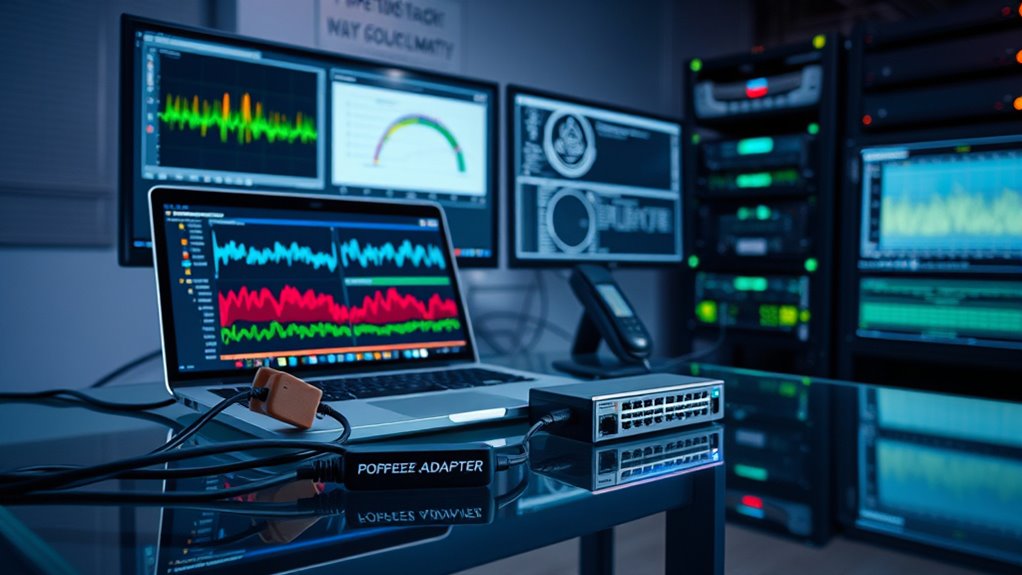
Although SIP looks abstract on paper, you can validate it quickly by standing up a small lab that separates signaling from media and lets you see every packet. Use two SIP endpoints (phones or softphones), a six-port switch with port mirroring, a Wireshark PC, and four Ethernet cables. PoE is optional. Build a star topology: attach both endpoints and the monitoring PC; mirror the phones’ ports to the PC. As you build the lab, remember that SIP is an open standard, enabling interoperability between different vendors’ phones, proxies, and tools.
Install a SIP proxy, create a domain, add users (username@domain), and enable 5060 for UDP/TCP or 5061 for TLS.
Configure endpoints with matching codecs and correct SDP media/port/address details. Set registration intervals (30–3600s). If needed, enable STUN/TURN/ICE for network topology variations.
In Wireshark, filter SIP 5060 and RTP ranges, confirm INVITE/200/ACK, verify RTP sequence continuity, and baseline media quality monitoring.
Troubleshooting Common SIP and RTP Issues
When calls fail to register, connect, or carry audio, break the problem into signaling versus media and validate each layer methodically. Use SIP troubleshooting tools to confirm DNS, server/realm, and credentials. Check time sync, public IP allowlists, and whether UDP 5060 is blocked or SIP ALG is rewriting headers. For media, validate NAT: guarantee the PBX advertises its correct public IP in SDP and that RTP ports (e.g., 10000–20000) are open symmetrically. Also ensure QoS prioritization is configured so voice traffic is favored during congestion.
1) Registration: match usernames/secrets, domains, and proxies; verify reachability; align clocks; update provider with new public IPs.
2) One‑way audio: disable ALG, fix NAT, widen RTP ranges, avoid unnecessary MTP hairpinning.
3) Media quality: meet QoS requirements—packet loss <2%, jitter <30 ms, latency <150 ms.
4) Compatibility: align codecs, SRTP policies, session timers, and keepalives.
Frequently Asked Questions
How Does SIP Interact With NAT and Firewall Traversal Techniques?
You rely on SIP proxies, SBCs, STUN/TURN/ICE, and keep-alives. These nat traversal methods rewrite headers and SDP, test candidates, and relay media. For firewall bypass techniques, you use OPTIONS pings, connection-oriented media, latching, and IPsec NAT-T.
What Security Measures Protect SIP Signaling and RTP Media?
You protect SIP signaling and RTP media with encryption techniques and authentication mechanisms: TLS for SIP, SRTP with HMAC, DTLS-SRTP fingerprints, STIR/PASSporT, SDP integrity, replay protection, SBCs, STUN consent freshness, and secure relays, plus vigilant patching and access controls.
How Do SIP Trunking Providers Differ in Pricing and Features?
They differ by billing models (metered, unlimited channels, blended, channel-based, custom) and features. You’ll weigh per-minute rates, global coverage, redundancy, CRM/Teams integrations, fraud controls, analytics, and service level agreements guaranteeing uptime, support responsiveness, and performance across domestic and international routes.
Can SIP Integrate With Cellular Networks and PSTN Gateways?
Yes. You can enable cellular network integration and PSTN gateway interoperability via SIP trunking and gateways. Configure codecs (PCMU), QoS, number normalization, and redundancy. Mobile devices act as extensions, while gateways translate signaling and route calls reliably across networks.
How Do Qos Policies Prioritize RTP on Enterprise Networks?
You prioritize RTP by marking DSCP EF, classifying ports, and enforcing LLQ with strict priority queues. You apply bandwidth allocation, reserve 20–30%, enable codec prioritization, shape traffic, compress headers on slow WANs, and maintain end-to-end consistent policies.
Conclusion
You’ve got the essentials to build, test, and troubleshoot SIP and RTP. Keep your signaling clean, your SDP precise, and your media paths open. Validate call flows with captures, confirm codec matches, and watch NAT, ports, and timers. Start small in a lab, iterate quickly, and document baseline behavior. When calls fail, trace INVITE to BYE, inspect offer/answer, and verify RTP flow. With disciplined testing and monitoring, you’ll deploy reliable VoIP with fewer surprises and faster fixes.